Call Us Today : (757) 596-6850

Can You Eat with Veneers? What Dentists Want You to Know
If you’ve recently had dental veneers placed or are planning to get them, you may be wondering: Can You Eat with Veneers? This is a common concern for many patients, especially those new to cosmetic dental treatments.
Understanding how to eat with veneers teeth after the procedure is essential for protecting your investment and keeping your smile in great shape. In this blog, we’ll walk you through what you can eat, what to avoid, and how to care for your new porcelain veneers.
What Are Porcelain Veneers and How Do They Work?
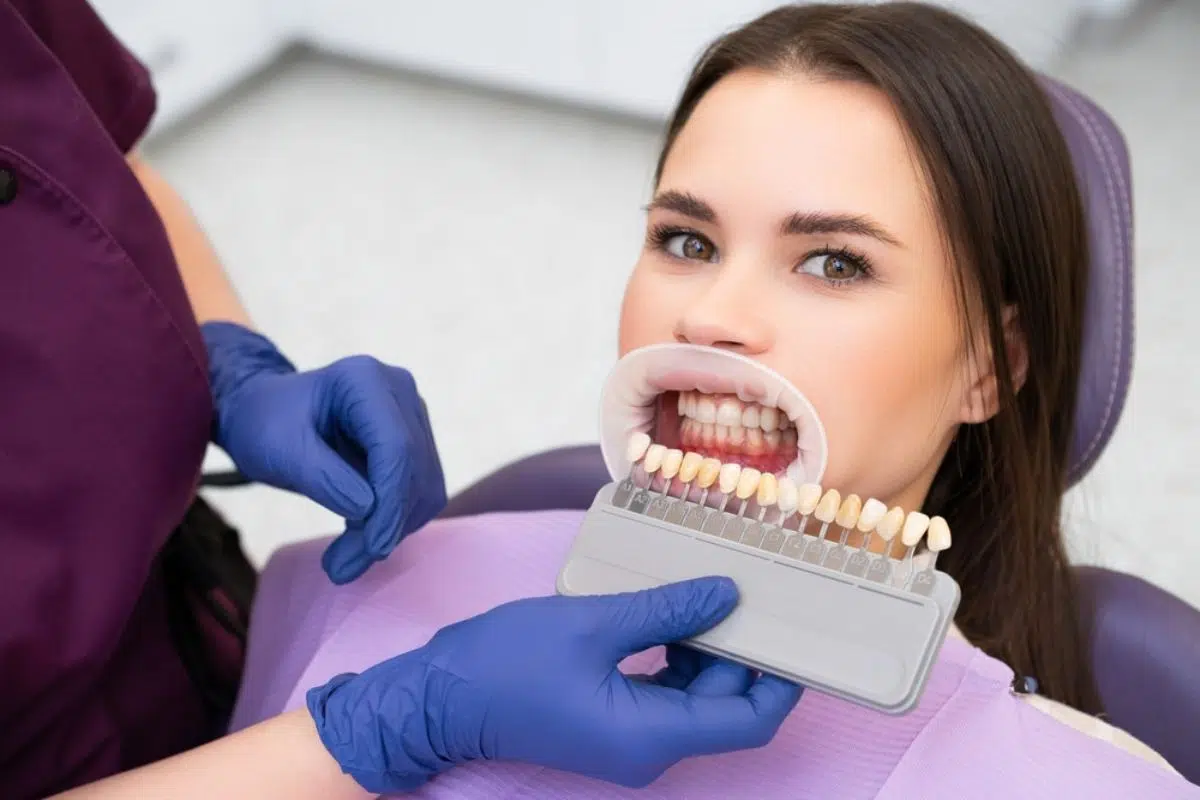
Porcelain veneers are ultra-thin, custom-crafted shells that are bonded to the front surface of your teeth. They are made from high-quality ceramic material that closely resembles natural tooth enamel. Known for their strength, stain resistance, and natural appearance, porcelain veneers are a long-term solution for improving your smile.
At our dental office, we specialize in providing porcelain veneers, crafted with precision to blend seamlessly with your natural teeth. These veneers are permanently bonded and designed to function just like your real teeth—making it possible to eat normally once the healing phase is over.
Can You Eat with Veneers Without Worry?
Yes, you can eat with veneers confidently, especially once they are properly bonded and your mouth has adjusted. Porcelain veneers are durable and made to withstand everyday biting and chewing. After the initial adjustment period of a few days, most patients return to their usual diets—though with some smart precautions.
If you’re looking for expert cosmetic care, I personally had a great experience getting veneers in Newport News. The process was smooth, and the dental team ensured I understood every step—including what I could safely eat.
Foods You Can Eat Safely with Porcelain Veneers
Once your veneers are fully bonded and any sensitivity has subsided, you can enjoy a wide variety of foods. Here are some safe and comfortable options:
- Soft fruits like bananas, melons, and berries
- Cooked vegetables such as carrots, spinach, and zucchini
- Dairy products including cheese, yogurt, and milk
- Soft grains and pasta like rice, oatmeal, and noodles
- Lean proteins like fish, chicken, and eggs
These foods are gentle on your veneers teeth and support your overall dental health. Eating mindfully helps prevent unnecessary stress on your porcelain veneers.
What Foods to Avoid with Porcelain Veneers
Even though you can eat with veneers, there are some foods and habits to avoid to extend their life and prevent damage:
- Very hard foods like raw carrots, hard candies, or ice (risk of chipping)
- Sticky foods like caramel, chewing gum, or taffy
- Dark-colored beverages and sauces such as red wine, cola, coffee, and soy sauce (can stain the edges over time)
- Crunchy snacks like popcorn kernels and chips
- Biting nails or opening packages with your teeth (never recommended with veneers or natural teeth)
These precautions are especially important for porcelain veneers to maintain their strength and appearance over the long term.
Final Thoughts
To wrap it up—can you eat with veneers? Yes, you absolutely can! With porcelain veneers, eating becomes natural again after a short adjustment period. Just avoid extremely hard or sticky foods and maintain good oral hygiene. Your smile deserves protection, and being mindful of what you eat plays a big part in that.
If you’re thinking about enhancing your smile with porcelain veneers, I highly recommend you visit our dental office for a consultation. At Covaney & Covaney, expert care and patient comfort come first—so you can enjoy your meal and your smile with confidence.